Garage Floor Epoxy
A hard, sealed film that locks out the alkali dust and survives a garage that sits at 120 degrees for weeks at a time.
Spring Valley is unincorporated Clark County, wedged between the Strip corridor and the west side. A lot of the housing dates to the 1980s and 1990s, so slabs often need crack repair before anything is poured.
Ground and climate. The valley floor sits on the USDA Las Vegas soil series — shallow, carbonatic, and cemented by a caliche layer about seven inches down. Concrete poured over it cures alkaline, near pH 8.4 to 8.6, and the July normal high is 104 F. Soil temperature means a slab can hold heat into the evening. Water is supplied by Las Vegas Valley Water District.
Permits. Building permits in Spring Valley come from Clark County Building and Fire Prevention. A coating over an existing slab is a finish; structural, drainage, electrical or egress work is permitted work.
A hard, sealed film that locks out the alkali dust and survives a garage that sits at 120 degrees for weeks at a time.
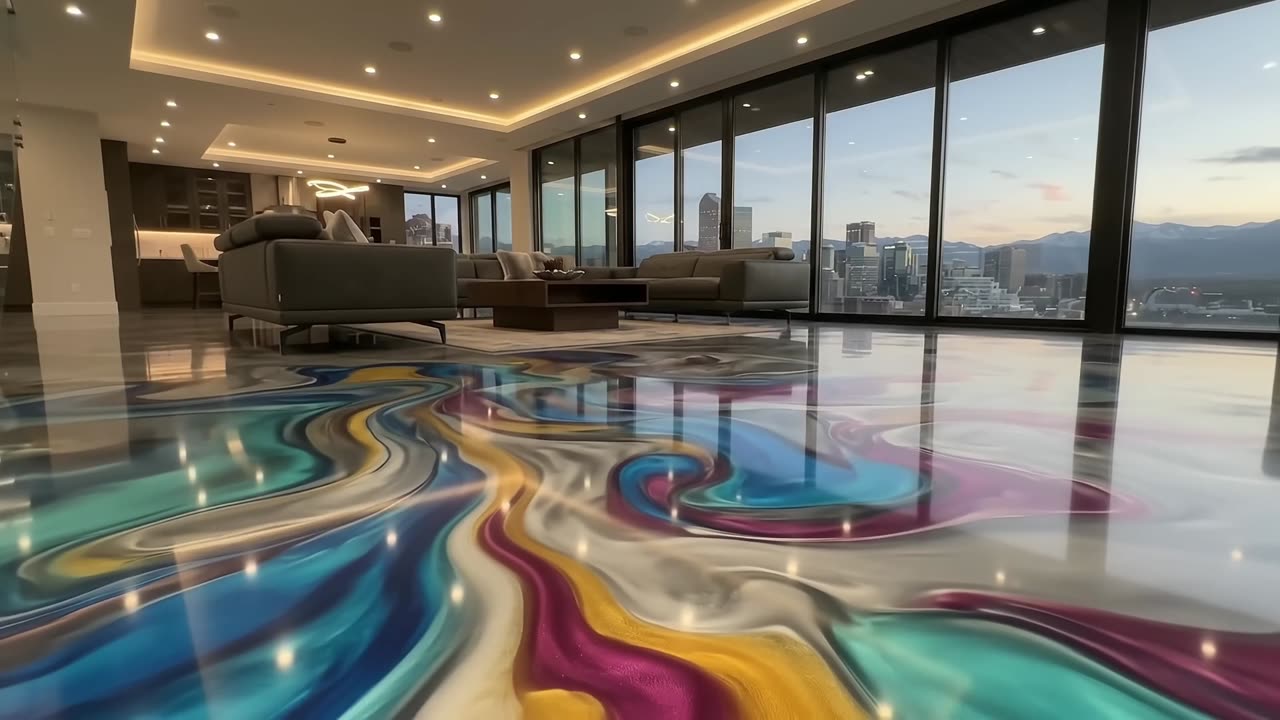
A poured, flowing floor for interiors — the system that turns a plain slab into something a hotel lobby would not blink at.
The workhorse: a full broadcast of vinyl flake over epoxy, buried in a polyaspartic topcoat.
No film, no peel, no bubbles — the slab itself is ground, honed and densified until it holds a shine.
A poured top over an existing counter, or a new substrate, finished as a solid sheet with no seams.
Few basements here, but plenty of converted garages, casitas and storage rooms that need a floor that sweeps clean.
Warehouses, shops, kitchens, dealership service bays and HOA amenity rooms — floors that have to work nights and weekends.
The fast, clear, UV-stable topcoat. In this sun it is the difference between a floor that stays clear and one that yellows.
Send the details and let a local crew quote it.