Garage Floor Epoxy
A hard, sealed film that locks out the alkali dust and survives a garage that sits at 120
Every coating starts with the concrete under it. The slab is assessed, prepared and tested before a system is recommended.
Two to three days including cure
1. Template and prep. Template the run, build or sand the substrate, mask the cabinets.
2. Pour and finish. Pour, move the pigment, then let it cure under cover for 48 hours.
What changes the schedule. Slab condition, square footage, moisture readings and slab temperature. Above roughly 90 F of slab temperature a standard epoxy loses pot life fast, so sections get smaller and the crew grows — the schedule stretches, the system does not change.
This service is quoted across the valley — Las Vegas, North Las Vegas, Henderson, Summerlin, Spring Valley, Paradise, Enterprise, Green Valley, Centennial Hills, Southern Highlands, Anthem, Mountain's Edge, Skye Canyon, Aliante, Providence, Inspirada, Rhodes Ranch, Whitney, Sunrise Manor and Boulder City.
A hard, sealed film that locks out the alkali dust and survives a garage that sits at 120
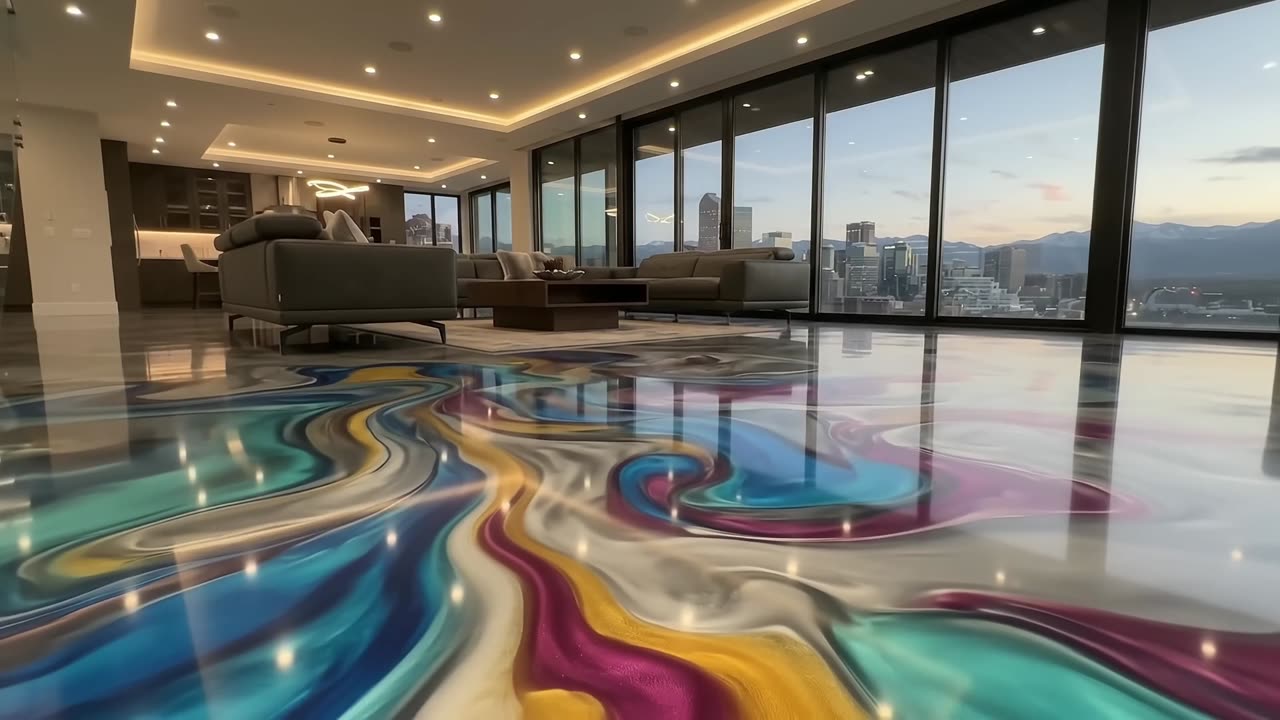
A poured, flowing floor for interiors — the system that turns a plain slab into something
The workhorse: a full broadcast of vinyl flake over epoxy, buried in a polyaspartic topcoa
No film, no peel, no bubbles — the slab itself is ground, honed and densified until it hol
A poured top over an existing counter, or a new substrate, finished as a solid sheet with
Few basements here, but plenty of converted garages, casitas and storage rooms that need a
Warehouses, shops, kitchens, dealership service bays and HOA amenity rooms — floors that h
The fast, clear, UV-stable topcoat. In this sun it is the difference between a floor that
Spalled edges, cracked aprons, alkali dusting and slabs that ate their last coating — repa
Yes, if it is installed over a properly ground slab. The two things that fail here are prep and heat. A film laid on a dusting slab over caliche lifts at the apron, and a standard clear ambers under west-facing sun.
Cured epoxy handles 104-degree air and a 140-degree slab. What the heat does change is the working time: pot life shortens, so a crew works smaller sections in July than in January.
Caliche is the cemented layer the USDA maps here as a petrocalcic horizon, about seven inches down in the Las Vegas series. It does not hold water, so slabs drain sideways, and the concrete above it cures alkaline, with a pH around 8.4 to 8.6. Moisture-tolerant primers and correct prep handle it.
A residential floor coating rarely needs one. A structural repair, a slab replacement or a commercial fit-out does, and the office that issues it depends on the address: the City of Las Vegas, Clark County, Henderson, North Las Vegas or Boulder City.
Between 50 and 85 degrees at the slab for the install. In July that means an early start and a slab that has been shaded, not a floor that is 130 degrees at noon.
Send the details and let a local crew quote it.